

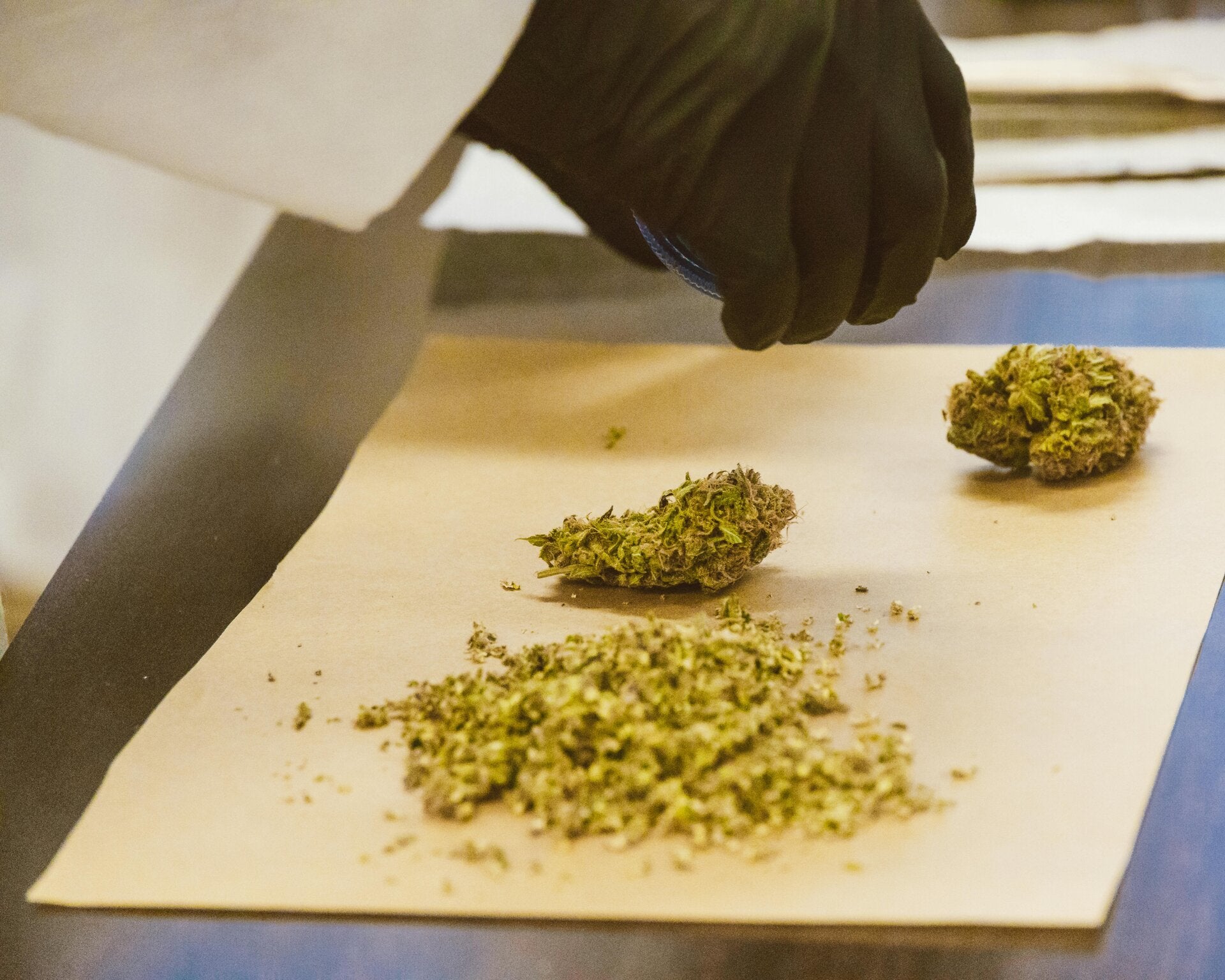
If you want to make high-potency cannabis edibles, decarboxylation (decarb) is the most critical step in your process. In its raw form, cannabis contains THCA, which is non-psychoactive. Decarboxylation is the process of applying precise heat to remove carbon atoms, converting THCA into active THC. Without this step, your cannabis edibles will lack the intended potency.
Why Temperature Control is Critical
It is vital that you do not let your buds bake over 220°F (105°C). If the temperature exceeds 230°F (110°C), you risk denaturing the THC into CBN. This not only decreases the potency but also creates a sedative effect that causes unwanted sleepiness rather than the desired experience.
Kitchen Tools Needed
-
Oven
-
External Oven Thermometer (Essential for ensuring your oven isn't running "hot")
-
Sharp Herb Grinder
-
Oven-Safe Glass Dish
-
Heavy-Duty Aluminum Foil
The Decarboxylation Process
-
Preheat: Set your oven to 220°F (105°C). Use your thermometer to confirm the actual temperature, as many ovens fluctuate significantly.
-
Grind: Grind your cannabis to a medium-coarse consistency—similar to what you would prepare for a joint or blunt. Avoid grinding into a fine powder.
-
Seal: Spread the material evenly across the bottom of your oven-safe dish. Seal the dish tightly with aluminum foil to trap the beneficial compounds.
-
Bake: For 1 ounce of cannabis, bake for 40 minutes at 220°F.
-
The Cooling Rule: This is the most important step for quality. Once the timer ends, allow the dish to cool down completely to room temperature BEFORE removing the foil. Opening it while hot allows the activated compounds to escape into the air.
The Decarboxylation Equation
Use this formula to determine your total bake time based on the amount of material you are processing:
Example: If you are processing 2 ounces of cannabis, your total bake time is 80 minutes.
Ready to put your activated cannabis to work?
You’ve unlocked the full potential of your material, now it’s time to apply it to the kitchen. Our Stoner Strategies Cannabis Cookbook Series by Ava Tyler is the ultimate resource for turning your perfectly activated material into professional-grade cannabis edibles. From dosing guides to gourmet techniques, learn how to elevate your home, cooking experience today.

Add comment
Comments